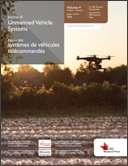
审稿时间:
出版周期:-
出版国家或地区:-
创刊:-
影响因子:1.3
是否预警:否
语言:English
是否OA开放访问:未开放
研究方向:REMOTE SENSING
SCIE期刊
The Journal of Unmanned Vehicle Systems is an academic journal dedicated to the field of unmanned vehicle systems, providing a platform for researchers, engineers, scholars, and industry experts to showcase and exchange the latest developments in unmanned vehicle technology. This magazine covers different types of unmanned systems such as unmanned aerial vehicle systems (UAS), unmanned ground vehicles (UGVs), unmanned surface vessels (USVs), and unmanned underwater vehicles (UUVs). Journal content typically includes original research papers, technical reports, review articles, case studies, and industry dynamic analysis, aimed at exploring the design, development, testing, operation, and management of unmanned vehicle systems. It pays special attention to the application of unmanned systems in both civilian and military fields, such as agricultural monitoring, disaster response, environmental monitoring, logistics distribution, search and rescue, national defense security, etc.
The magazine is committed to promoting innovation and application of unmanned vehicle technology, facilitating knowledge sharing and collaboration between academia and industry through the publication of high-quality academic papers. The editorial team of the magazine is composed of internationally renowned experts in the field, who have a profound understanding and recognition of the development trends and challenges of unmanned vehicle technology. The journal also places special emphasis on interdisciplinary research, encouraging the application of the latest research results in fields such as artificial intelligence, machine learning, sensor technology, communication technology, navigation technology, etc. to the design and optimization of unmanned vehicle systems. In addition, it also focuses on the social, legal, and ethical issues brought about by unmanned vehicle systems, providing scientific basis and reference for policy makers and the public.
《无人驾驶车辆系统杂志》是一本专注于无人车辆系统领域的学术期刊,它为研究人员、工程师、学者和行业专家提供了一个展示和交流无人车辆技术最新进展的平台。该杂志涵盖了无人航空器系统(UAS)、无人驾驶地面车辆(UGV)、无人水面船舶(USV)和无人水下航行器(UUV)等不同类型的无人系统。期刊内容通常包括原创研究论文、技术报告、综述文章、案例研究以及行业动态分析,旨在探讨无人车辆系统的设计、开发、测试、操作和管理等方面。它特别关注无人系统在民用和军用领域的应用,如农业监测、灾害响应、环境监测、物流配送、搜索与救援、国防安全等。
杂志致力于推动无人车辆技术的创新和应用,通过发表高质量的学术论文,促进学术界和工业界之间的知识共享和合作。杂志的编辑团队由该领域的国际知名专家组成,他们对无人车辆技术的发展趋势和挑战有着深刻的理解和认识。该期刊还特别注重跨学科的研究,鼓励将人工智能、机器学习、传感器技术、通信技术、导航技术等领域的最新研究成果应用于无人车辆系统的设计和优化中。此外,它也关注无人车辆系统带来的社会、法律和伦理问题,为政策制定者和公众提供科学依据和参考。
该刊已被国际权威数据库SCIE收录,该刊致力于发表经过严格同行评审的高质量原创文章,反映REMOTE SENSING领域的新进展、新技术、新成果,促进该领域科研交流和科研成果转化。该刊2023年影响因子为1.3,平均审稿速度为 ,近四年来没有被列入预警名单。如果您需要投稿发表服务及指导,可以联系我们的客服老师,我们专业专注服务期刊投稿协助10年,为您提供期刊投稿个性化定制服务,并且我们确保严格保密您的个人信息及稿件内容。
由Elsevier提出,用来评估期刊学术影响力的指标
CiteScore 排名
| 学科 | 分区 | 排名 | 百分位 |
| 大类:Mathematics 小类:Control and Optimization | Q1 | 17 / 118 |
86% |
| 大类:Mathematics 小类:Aerospace Engineering | Q1 | 23 / 131 |
82% |
| 大类:Mathematics 小类:Automotive Engineering | Q1 | 23 / 102 |
77% |
| 大类:Mathematics 小类:Electrical and Electronic Engineering | Q2 | 182 / 708 |
74% |
| 大类:Mathematics 小类:Control and Systems Engineering | Q2 | 70 / 270 |
74% |
| 大类:Mathematics 小类:Computer Science Applications | Q2 | 196 / 747 |
73% |
CiteScore:由Elsevier集团开发,类似影响因子用来评估杂志期刊学术影响力的一个指标。CiteScore采用了四年区间来计算每个期刊的学术引用。CiteScore拥有自带数据库Scopus,Scopus主要两个特点:一是免费面向所有人开放;二是采用透明的操作与计算,具有极高的可重复性。
由科睿唯安公司(原为汤森路透)制定
| 按JIF指标学科分区 | 收录子集 | 分区 | 排名 | 百分位 |
| 学科:REMOTE SENSING | ESCI | Q3 | 46 / 62 |
26.6% |
| 按JCI指标学科分区 | 收录子集 | 分区 | 排名 | 百分位 |
| 学科:REMOTE SENSING | ESCI | Q3 | 37 / 62 |
41.13% |
JCR分区是由科睿唯安公司(原汤森路透,2016年易主科睿唯安)每年发布的,设置了254个具体学科,根据每个学科分类按照期刊当年的影响因子高低将期刊平均分为4个区,分别为Q1、Q2、Q3和Q4,各占25%。JCR分区包括自然科学(Science Edition)和社会科学(Social Sciences Edition)两个版本。其中,JCR-Science涵盖来自83个国家或地区、约2000家出版机构的8500多种期刊,覆盖176个学科领域。JCR-Social Sciences涵盖来自52个国家或地区、713家出版机构3000多种期刊,覆盖56个学科领域。
期刊各项综合数据统计与评价
文章数据
| Gold OA文章占比 | 研究类文章占比 | 文章自引率 | H-index指数 | 年发文量 |
| 31.25% | 0.00% | -- | -- | 0 |
| 开源占比 | 出版国人文章占比 | OA被引用占比 | 出版撤稿占比 | 影响因子 |
| -- | -- | -- | -- | 1.3 |
历年CiteScore数据
历年引文指标和发文量
历年影响因子
影响因子:影响因子衡量的是某一期刊的文章在特定年份或时期被引用的频率,这一指标被广泛认可。以2024年为例来说明影响因子的计算方式:期刊2024年的影响因子=该刊2022和2023年发表的全部论文在2024年被引用的总次数/2022和2023年的总论文数 。
若用户需要出版服务,请联系出版商。